
MUSCOVY 101
Everything You Need to Know About Muscovy Ducks

ORIGINS & HISTORY
Muscovy ducks are native to Central and South America, where they have thrived for thousands of years. Unlike mallards, the ancestors of most domesticated ducks, Muscovies are entirely separate species. Indigenous cultures valued them for their meat, eggs, and friendly nature, leading to their domestication long before European settlers arrived.
Over time, Muscovies spread across the world, adapting to various environments. Today, both wild and domesticated Muscovies can be found in North America, Europe, and beyond. While some consider them an introduced species, they are not invasive in the way many assume.
What Makes Muscovies Uniquie?
-
They Don't Quack
Instead, they communicate through soft hissing sounds, tail wagging, and body language.
-
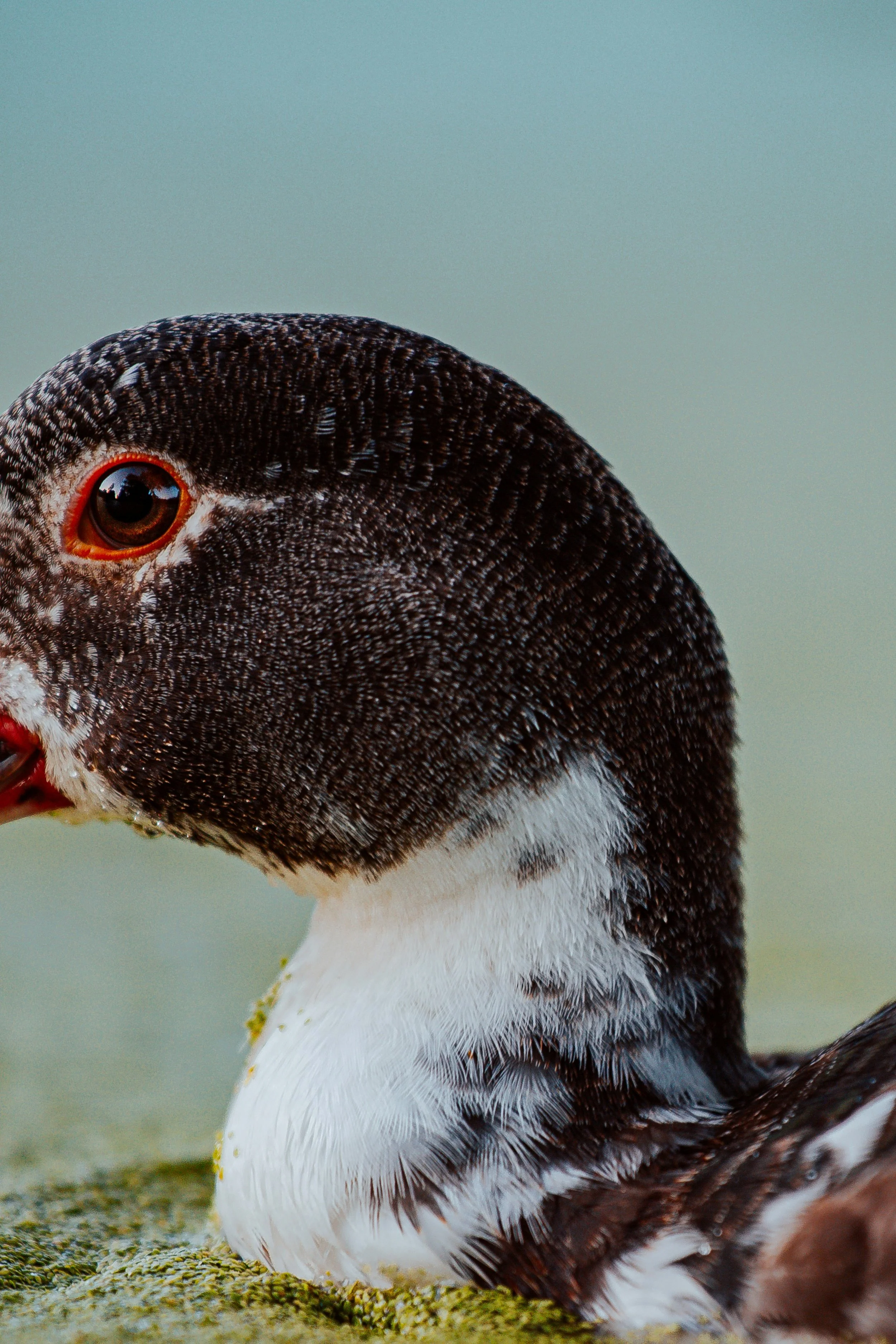
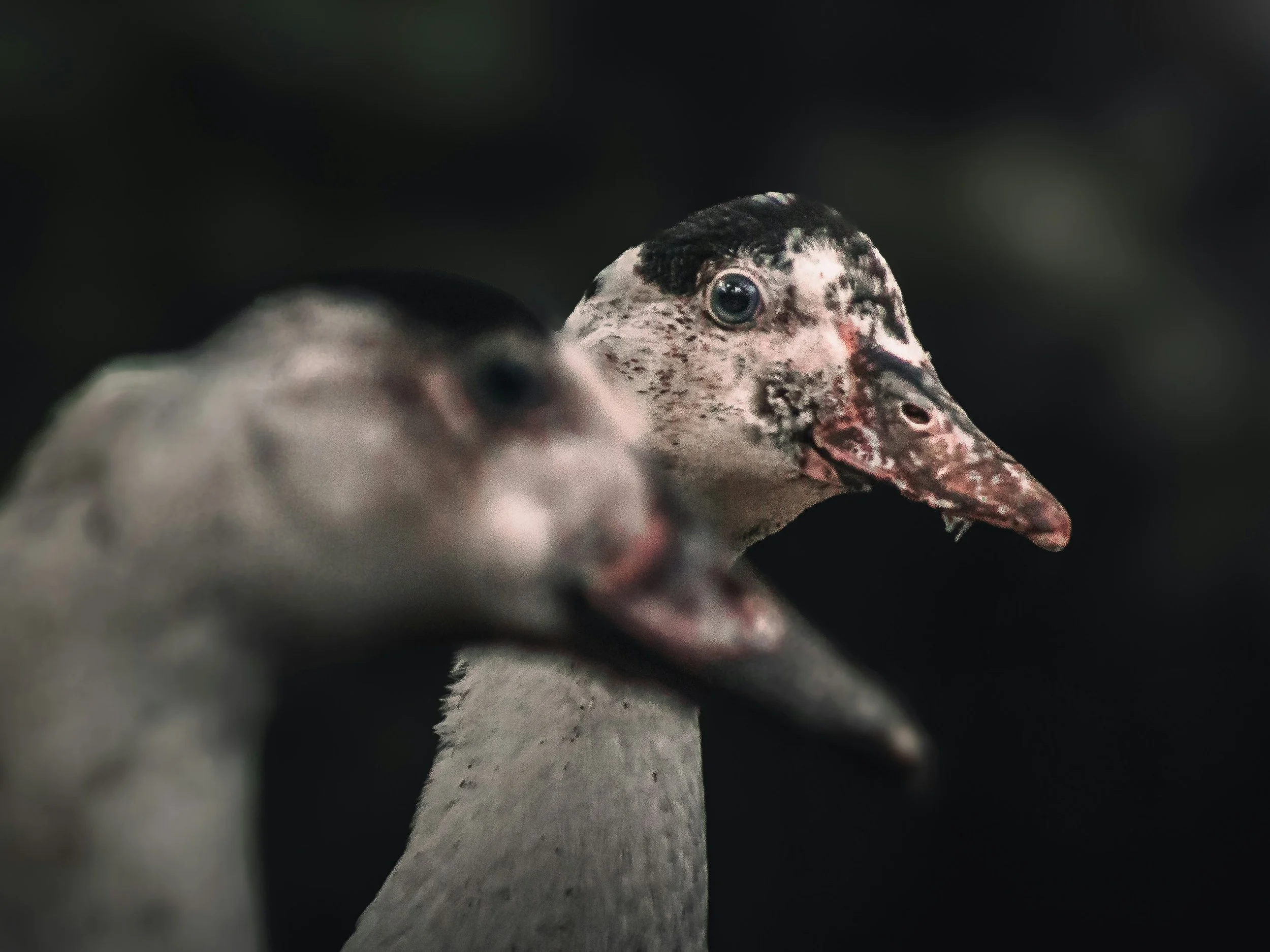
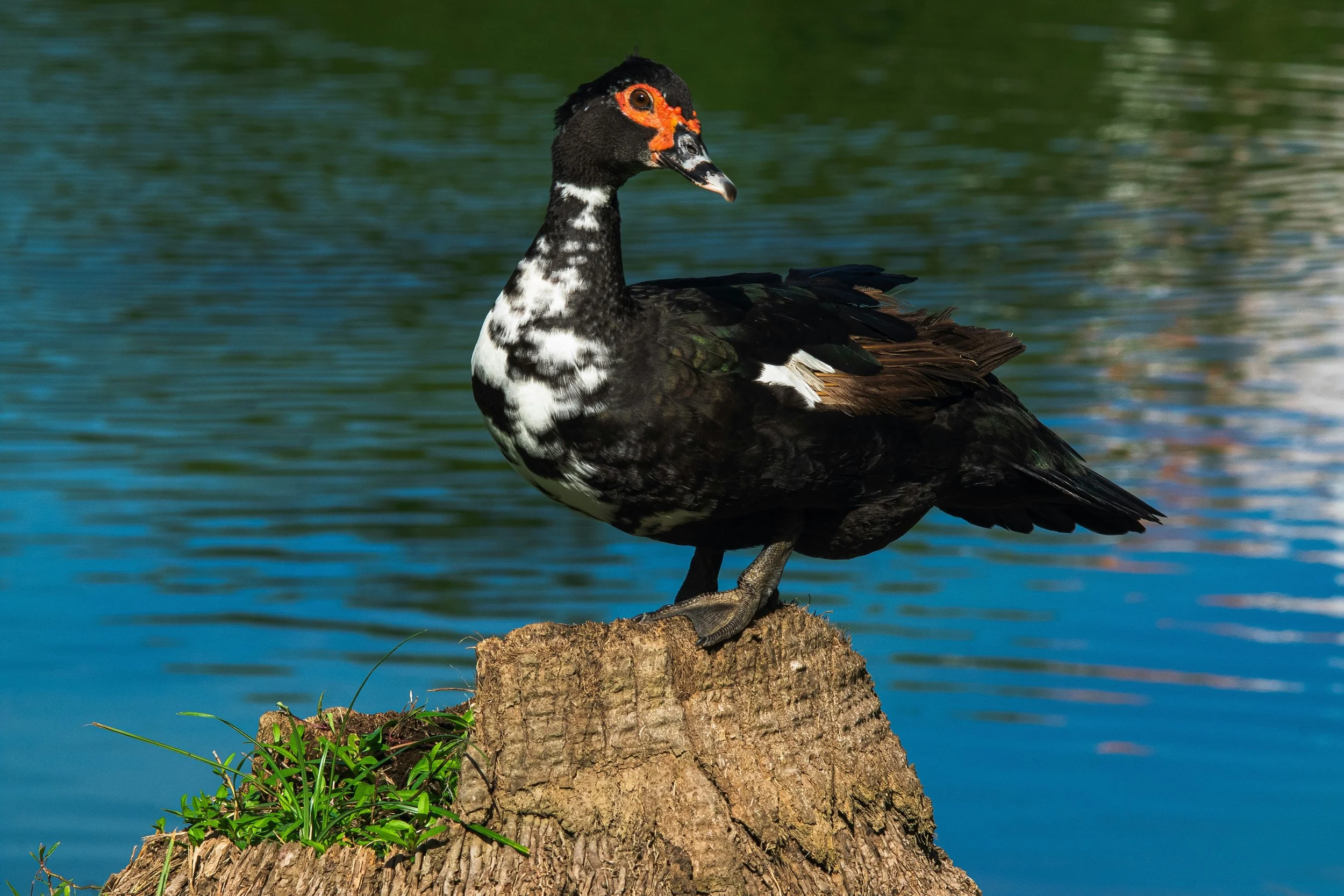
Red Facial Caruncles
The red, bumpy skin around their eyes and beak is a distinctive feature.
-
Intelligence & Personality
Muscovies are social, recognize people, and even show affection.
-
Excellent Pest Control
They love eating mosquitoes, flies, and other insects, making them helpful in the environment
-
Powerful Fliers
Unlike most domestic ducks, Muscovies have strong wings and can fly short distances with ease
-
They Have Clawed Feet
Unlike most ducks, Muscovies have strong, sharp claws that help them perch in trees
Common Misconceptions
Despite their charm and gentle nature, Muscovy ducks are one of the most misunderstood birds in Florida.
Let's set the record straight.
❌ "They're Invasive!"❌
This is the most common and most damaging myth about Muscovy ducks.
The word "invasive" has a specific meaning: a species that aggressively outcompetes native wildlife, destabilizes ecosystems, and spreads destructively. Muscovies don't fit that definition.
They tend to stick to small, established flocks rather than spreading aggressively. They coexist peacefully alongside native birds without displacing them. They actually benefit the ecosystem by consuming mosquitoes, flies, and other pests. Muscovies have been living alongside Florida communities for decades — at this point, they are a naturalized part of the landscape, not a destructive force within it.
❌ "They Carry Diseases!"❌
Muscovy ducks are no more prone to carrying or spreading disease than any other wild bird, including the mallards, ibises, and herons that no one bats an eye at. This myth has been used to justify mass removal efforts, but it isn't grounded in science. Like all wildlife, Muscovies thrive when they have access to clean water and are not being fed an unhealthy diet of processed human food. The real disease risk? Bread. Feeding ducks bread degrades water quality and harms the birds themselves, not their mere presence.
❌ "They're Aggressive!"❌
Muscovies are actually one of the gentlest duck species you'll encounter. A nesting female may hiss/huff or stand her ground if she feels her eggs are threatened. But we all know that's not aggression, that's motherhood. Males may display dominance toward other males during the breeding season through puffing and posturing, but this rarely involves humans. People who take the time to observe Muscovies consistently find them to be calm, curious, and even affectionate toward those who treat them kindly.
❌ "They're a Nuisance!"❌
The "nuisance" label almost always comes down to one thing: someone feeding them. When Muscovies are fed regularly in one spot, they congregate there in large numbers because why wouldn't they? Remove the food source, and the flock naturally disperses. The ducks aren't the problem; the feeding habits are. Muscovies that are allowed to forage naturally and live alongside their community are peaceful, quiet neighbors. Remember, they don't even quack!!
❌ "They Don't Belong Here!"❌
Muscovy ducks have been a part of Florida's communities for generations. Many residents grew up with them on neighborhood ponds and consider them a beloved part of local life. While they may not be native in the technical sense, "belonging" is about more than geography, but it's about the relationships, memories, and ecosystems these birds have become part of. They are here, gentle, and deserve to be treated with compassion.

Why We Should Appreciate Them
Muscovy ducks bring joy, beauty, and ecological benefits to the areas they inhabit. Whether providing natural pest control, forming strong bonds with caretakers, or simply adding to the biodiversity of a region, these birds deserve respect and kindness. By understanding them better, we can help create a world where Muscovies are embraced rather than mistreated.
Behavior & Communication
Muscovy ducks have a rich and expressive communication style that sets them apart from other waterfowl. Unlike most ducks, they are largely silent; instead of quacking, they rely on a sophisticated mix of physical cues to express themselves.
Males communicate through a low, breathy hiss, while females produce a softer trilling sound. Both sexes wag their tails enthusiastically, much like a dog when they're excited or happy to see someone they recognize. They also bob their heads as a greeting, and will puff up their feathers when feeling threatened or asserting dominance.
Muscovies are highly social and form strong bonds with both their flock and the people who care for them. They recognize individual humans, remember kindness, and will often follow a trusted caretaker around. Within their flock, they maintain a social hierarchy. Males establish territories and dominance through visual displays rather than aggression, and females are fiercely protective mothers.
Diet & Feeding Guide
Muscovy ducks are natural omnivores with a diverse diet, making them highly self-sufficient in the wild. They feed on aquatic plants, grasses, seeds, small fish, insects, crustaceans, and even termites. Their appetite for mosquitoes, flies, and other pests makes them a genuine ecological asset in the areas they inhabit.
If you encounter Muscovies and want to feed them, here's what to know:
Safe foods:
Cracked corn or whole kernel corn
Peas (thawed frozen peas work great), a Muscovy Favorite!
Leafy greens like romaine or kale
Grapes cut in half, a Muscovy Favorite!
Cooked plain rice or oats
Duck pellets
What to avoid:
Bread, crackers, or chips — These have no nutritional value and can cause a condition called "angel wing," a permanent wing deformity, especially in ducklings. We actually cover this in depth in our blog post on why feeding ducks bread is harmful.
Processed or salty foods
Avocado, onion, or citrus are toxic to waterfowl
Chocolate or sugary foods
The best thing you can do for a wild Muscovy is offer appropriate food in moderation or simply enjoy watching them forage naturally.
How to Coexist
Living alongside Muscovy ducks doesn't have to be a conflict.
With some understanding and a few simple practices, neighbors and communities can coexist peacefully with these birds.
Do:
Enjoy them from a respectful distance. Muscovies are curious and friendly, but like all wildlife, they do best when they aren't overly dependent on humans.
Offer appropriate food in moderation if you choose to feed them (see our Diet & Feeding Guide above).
Contact a local sanctuary or rescue if you find an injured or abandoned duck or duckling. Our partners at the Muscovy Sanctuary of Florida are a great resource.
Be patient with nesting females. A mother on a nest is doing exactly what nature intended. She'll move on once she and her ducklings are ready.
Don't:
Feed them bread or junk food. It harms them and encourages large flocks to congregate in one area.
Chase or harass them. Beyond being unkind, it causes real stress to these sensitive animals.
Separate a mother from her ducklings unless there is a genuine emergency and you are prepared to get them proper care.
Attempt to relocate them on your own without contacting a qualified rescue organization first.
If Muscovies are gathering in large numbers on your property and you're unsure what to do, the most effective long-term solution is to stop feeding them and let them disperse naturally.
Reproduction & Life Cycle
Muscovy ducks are prolific breeders, which is one of the reasons they thrive in Florida's warm climate. Understanding their life cycle helps explain both their resilience and the challenges surrounding population management.
Nesting & Eggs Females typically nest in elevated locations like tree cavities, between palm fronds, on ledges, or in wooden boxes. A hen will lay a clutch of 8 to 16 eggs and incubate them for approximately 35 days! This is one of the longest incubation periods of any domestic duck. She is a devoted mother and rarely leaves the nest during this time (typically only once or twice per day).
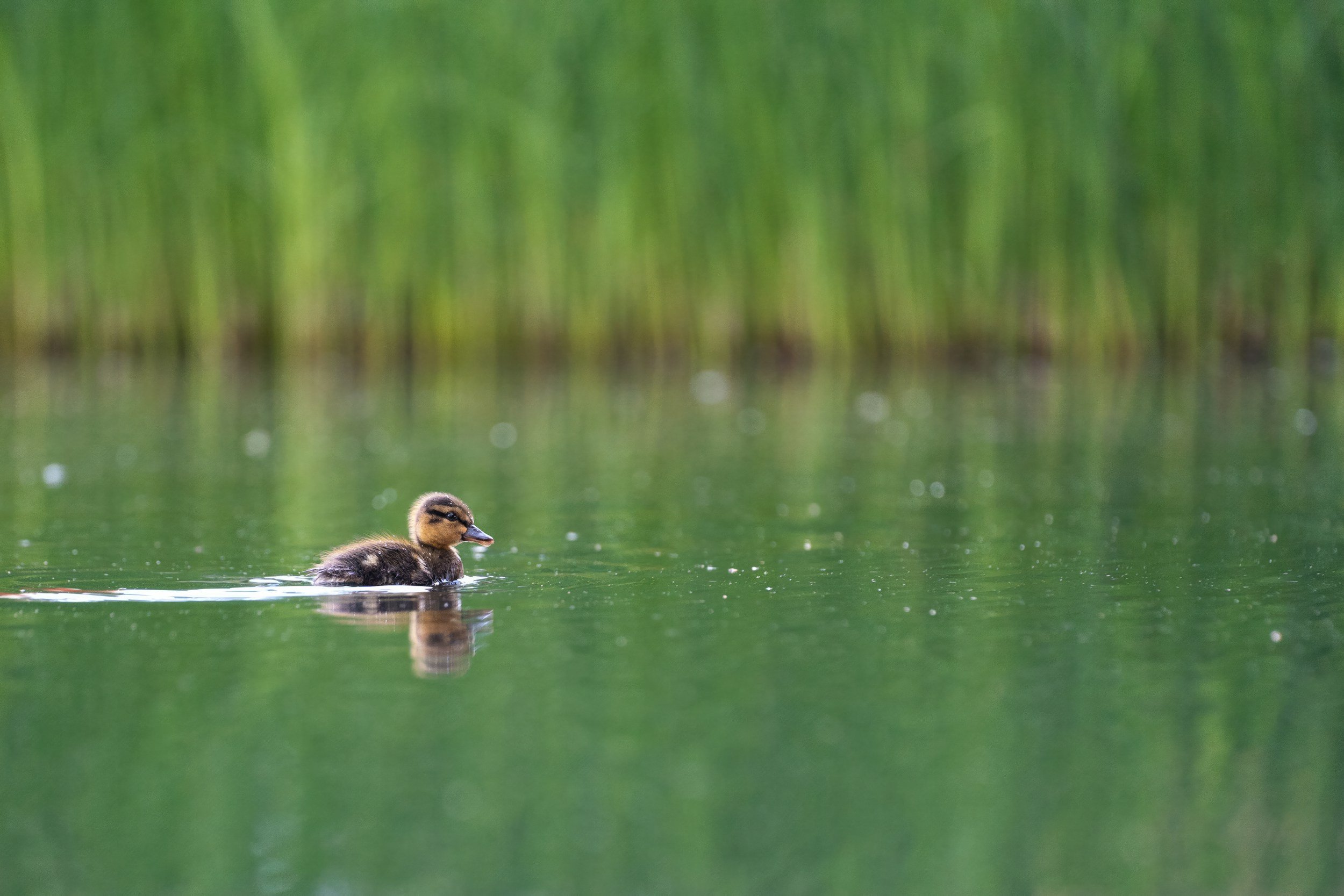
Ducklings are precocial, meaning they are mobile and alert almost immediately after hatching. They stay close to their mother for the first several weeks of life, learning to forage and navigate their environment. She will fiercely protect them from perceived threats.
Maturity & Lifespan Muscovies reach sexual maturity at around 6 months of age. In the wild, they typically live 5 to 7 years, though in a safe, well-cared-for environment, they can live 12 years or more. They do not form stable long-term pairs, as males will mate with multiple females in a season.
Breeding Season: In Florida's warm climate, Muscovies can breed multiple times per year, contributing to rapid population growth in suburban areas.
This is why humane population management strategies like the egg collection program run by our partners at the Muscovy Sanctuary of Florida are so important.
Color Variations
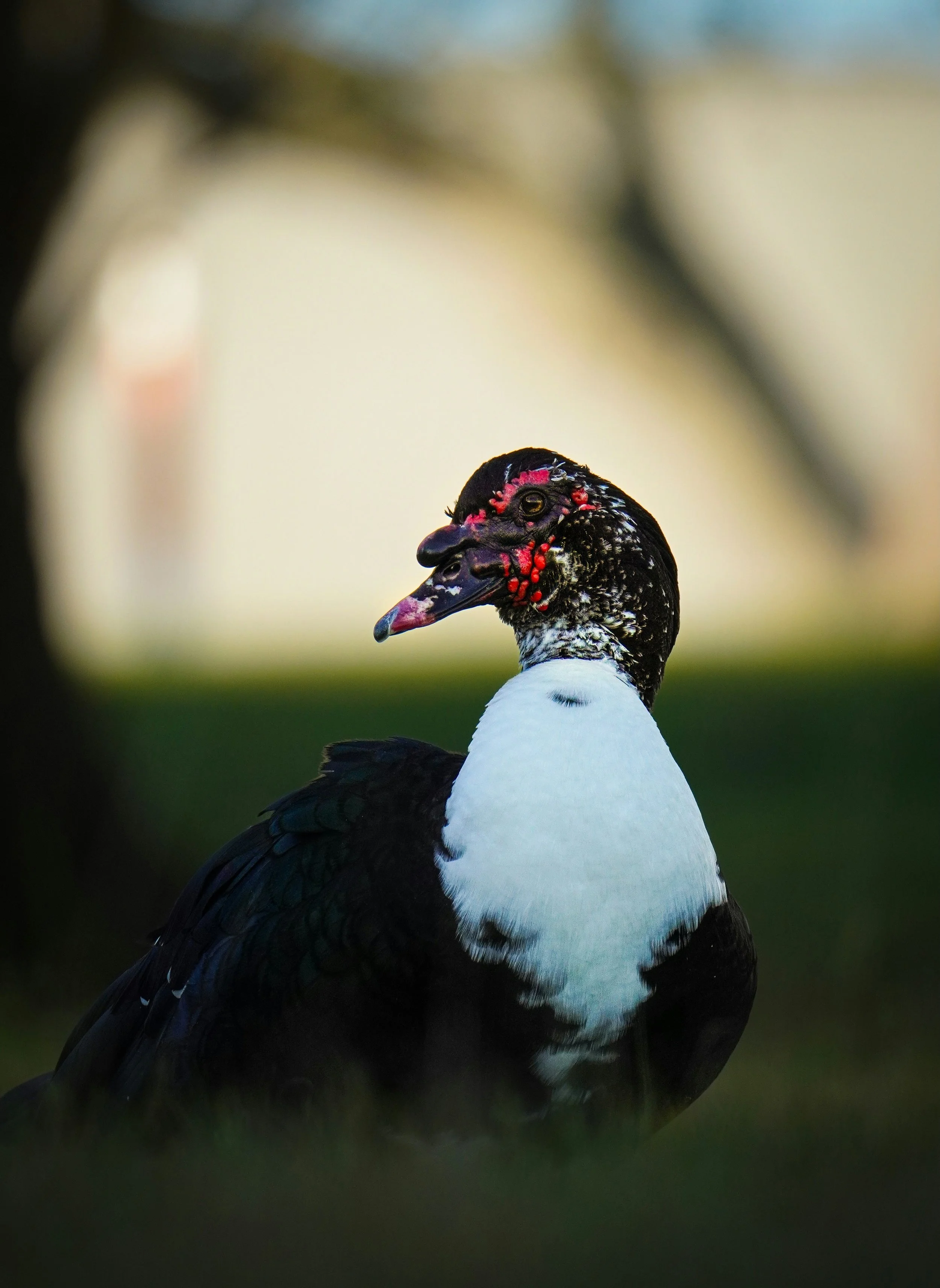
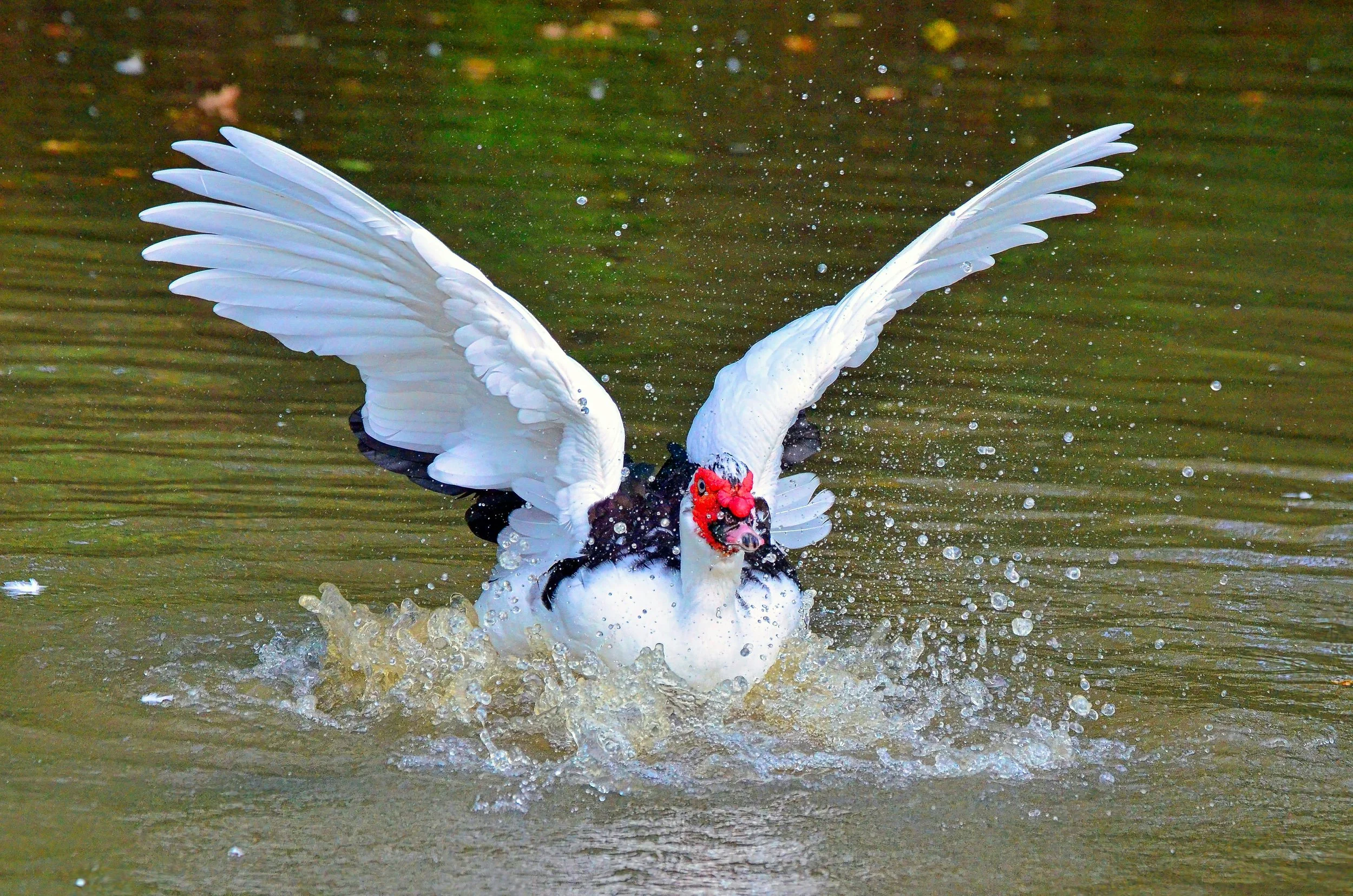
One of the most visually striking things about Muscovy ducks is the extraordinary range of colors they come in. While wild Muscovies are predominantly dark brownish-black with iridescent green and purple sheens and white wing patches, domesticated Muscovies have been selectively bred into a stunning variety of color morphs.
Common color variations include:
White — Fully white plumage, one of the most common domestic varieties
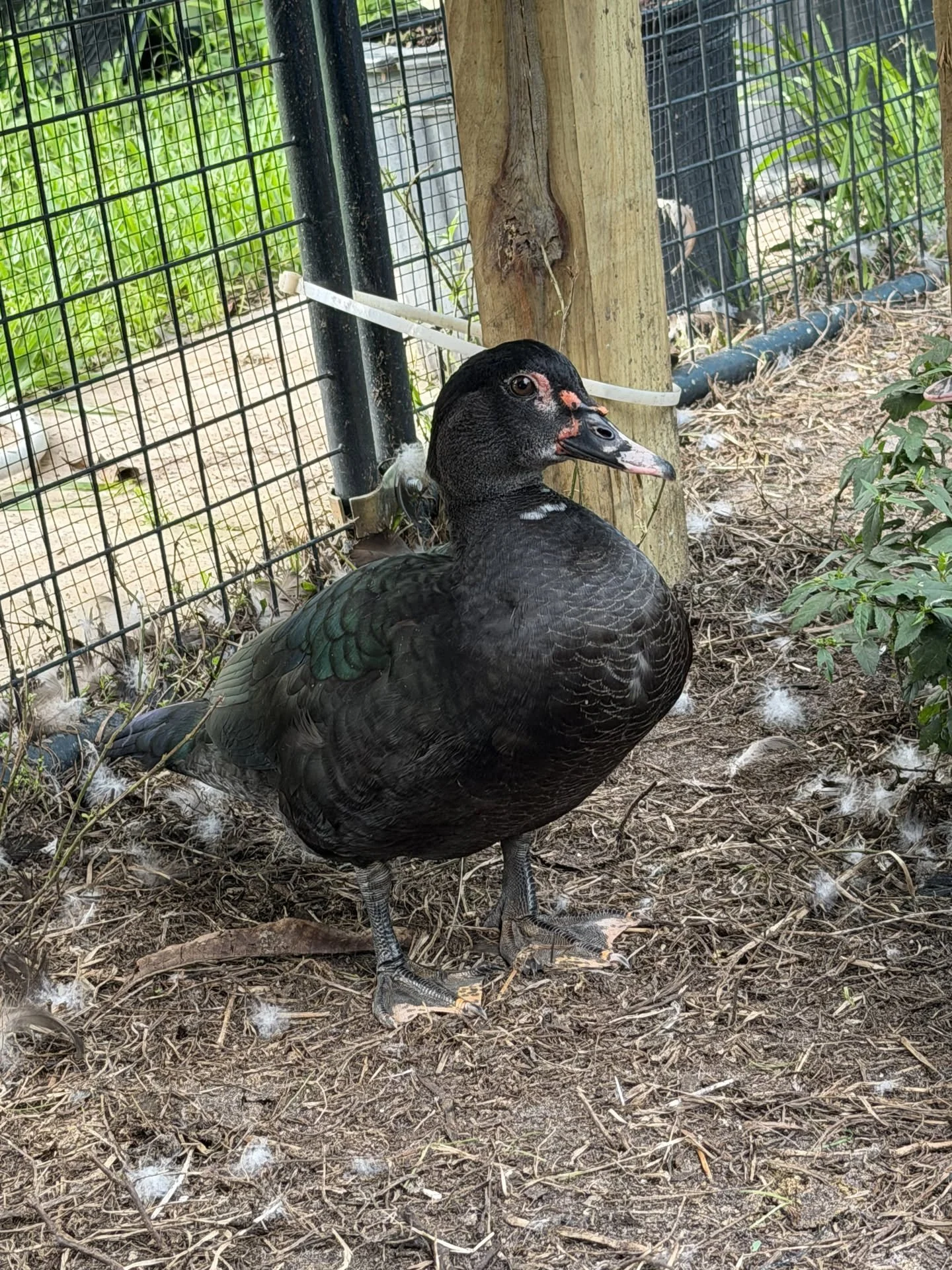
Black — Deep, glossy black with iridescent sheen
Blue — A soft slate-blue coloring, sometimes called "grey."
Chocolate — A warm brown tone throughout the body
Lavender — A diluted, silvery-grey with a soft purple hue
Pied — Any base color combined with white patches, creating a uniquely patterned bird
Barred — A striped pattern across the feathers
Rippled — A rare variation with a wave-like feather pattern
No matter the color, all Muscovies share their signature red facial caruncles, which are the bumpy, fleshy skin around their eyes and beak that makes them instantly recognizable. The caruncles are more pronounced in males and tend to grow larger with age.